Garage Door Off Track Repair in Macomb, IL
The job is to brace the door, guide it back into the rails, and leave it riding on straight track and healthy rollers, with the original cause corrected so it doesn't happen again.
A roller sitting outside its rail, a door that tilts or jams, or a panel bent where it snagged all mean the door is off track. For a garage door in the Macomb area, stop using it and keep the opener switched off.
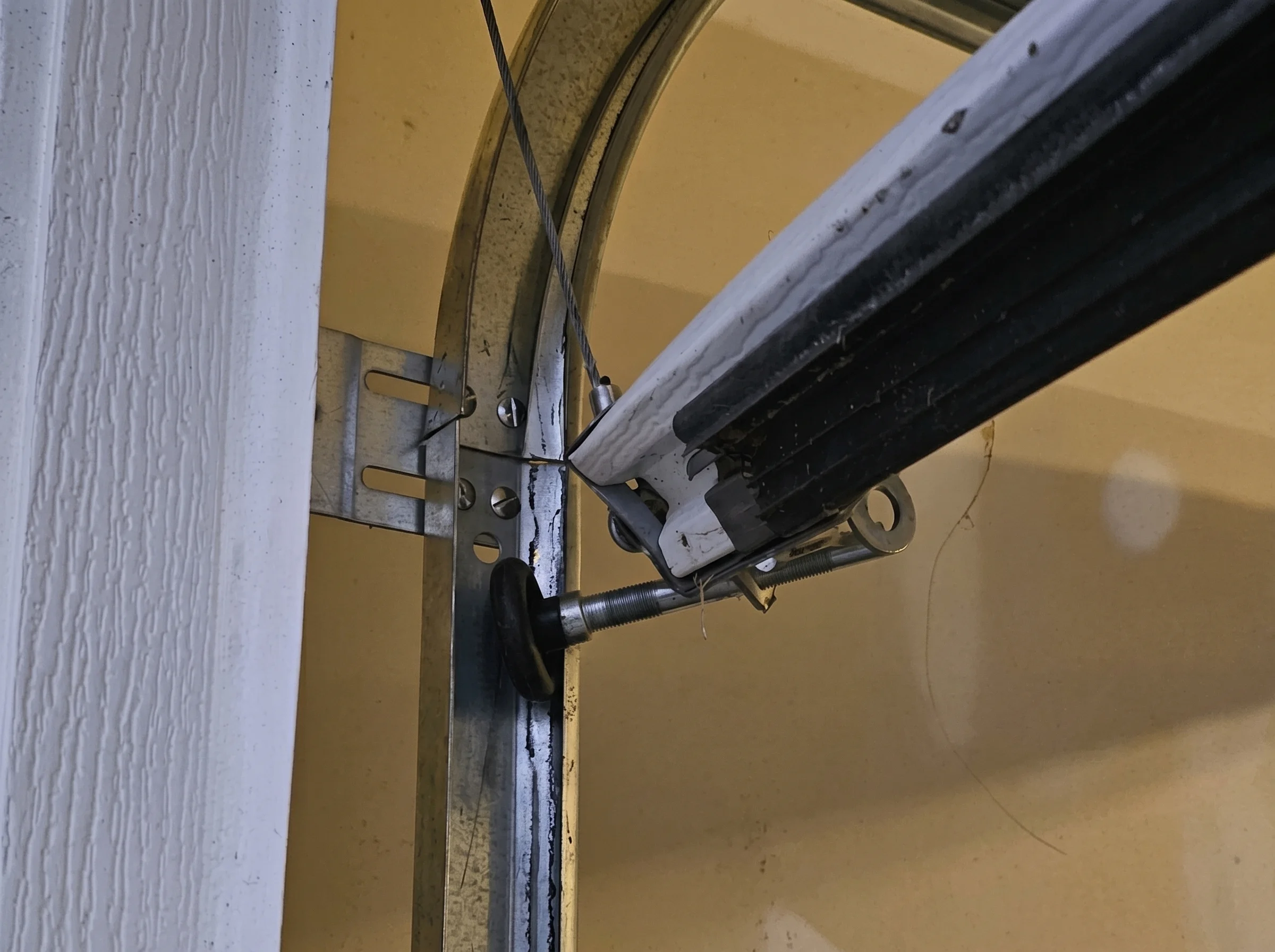
How to recognize a derailed door
A roller or several out of the rail, most often low on the door or around the bend where the track heads up toward the ceiling, usually on one side.
A cocked or jammed door, often hung up half open.
A buckled or creased panel, left where the opener kept pushing against the jam.
Rail that is visibly bowed, dented or sagging off the wall.
Scraping, popping or grinding during travel, shortly before it jumped.
Derailed door? Leave the opener off, and let us know which side jumped and what led to it.
Contact UsWhat knocks a door off track
A car strike
A bumper meeting a shut or half-raised door tops the list, and it tends to crimp the lowest stretch of rail too.
A cable that let go
One corner falls, the panels twist, and rollers pop free. A loose cable is dealt with on the cable repair page.
Rollers past their life
A roller whose bearing has locked up drags instead of turning, then leaps out at the first rough spot.
Slack, warped rail
Years of shaking loosen the brackets that fasten the rail to the wall, so the rails drift apart until a roller drops out.
An obstruction underneath
A bike, bin or slab of frozen slush under the edge; NOAA puts the area at about 21 inches of snow a year.
Before anything else
Leave the opener off
The motor keeps forcing a stuck door and can bend panels or rip rail off the wall.
Keep your hand off the red release cord when the door is partly raised and derailed, because it can drop or swing completely free.
Don't hammer rollers back into the rail while the door is loaded. Spring force is still acting on it, and it can lurch without warning.
Stay out from under it, and if a vehicle is stuck inside, say so up front.
How the repair goes
The door gets clamped or propped so it can't drop or slide during the work, with spring tension handled as required.
Damage gets sized up
Which rollers failed, how much rail is bent, any creased panels, and whether a cable or spring set it off.
Rail is straightened or swapped out
A mild bend can be coaxed straight; creased or torn lengths are swapped out.
Worn or broken rollers come out, and hinges are examined, because a cracked hinge can fling a roller out again.
The door is hung back in its rails and the brackets tightened. Force and travel get rechecked on the opener, since 16 CFR Part 1211 sets the entrapment protection standard.
Describe what happened
Tell us in a couple of sentences what you see. You don't need the part names; plain description works.
Rollers
How smoothly and quietly a door travels depends mostly on its rollers, and those wear out far sooner than the door does.
Bare steel rollers with no bearings are the entry level: noisy, and hard on the rail as well as on themselves.
Nylon rollers on sealed bearings run much quieter and call for hardly any lubrication.
A wobble, flat spot, cracked wheel or locked bearing marks a roller as due.
A door that is merely noisy, not broken, often just needs new rollers, a job that commonly fits into a maintenance visit anyway.
What sets the cost of derailment repairs
How far it came out
A single corner roller or two, versus a door swinging loose.
Rail damage
Whether lengths are straightened or replaced, on one side or both.
Replacement rollers and hinges.
Creased or cracked panels
A badly bowed panel may need replacing, and an older door's style isn't always easy to match.
A cable or spring problem underlying the derailment.
When a panel is a write-off
A hard knock can leave panels too creased to straighten. One panel can often be swapped if a match is still made; get that quote in writing, as the Illinois Attorney General advises.
Should that fail, or several panels be damaged, garage door installation covers the replacement choices in full.
Quick answers
Is putting a roller back in the rail a DIY job?
Sometimes, but only for one roller that slipped out low on a closed door with straight track and no slack cable. Beyond that, stop: the door is heavy, loaded by springs, and can move when you least expect it, so leave it alone.
Why does one side of the door keep derailing?
Often the rail has drifted slightly, a bracket on that side has worked loose, or its cable needs adjusting. Re-hanging without addressing the cause means it comes out again.
Should I oil the rails?
No. Wipe them clean and leave them dry; oil on the rail picks up grit. Lubricant belongs on bearings, hinges and springs.
Other work on garage doors
Garage Door Cable Repair
Frayed, broken or slipped cables, and a door sagging to one side.
Read more →Garage Door Spring Repair
Broken springs, torsion or extension, replaced with units suited to the door's weight.
Read more →Garage Door Installation
Complete doors or single panels in steel, wood, composite or glass, fitted to the opening.
Read more →Contact us
Say where the door is stopped (closed, open or partway), which side jumped the rail, whether something struck it, and whether a cable looks slack.
One photo of each side, taken from a few feet back, tells us more than anything else you could send.