Garage Door Spring Repair in Macomb, IL
In Macomb, a broken spring is replaced with one sized to what your door truly weighs. Then comes balancing, so the opener only guides the door instead of lifting it.
If the garage went bang and the door now sticks shut, or rises only a handful of inches, a spring has very likely snapped. Leave it closed and finish reading before you put a hand on anything.
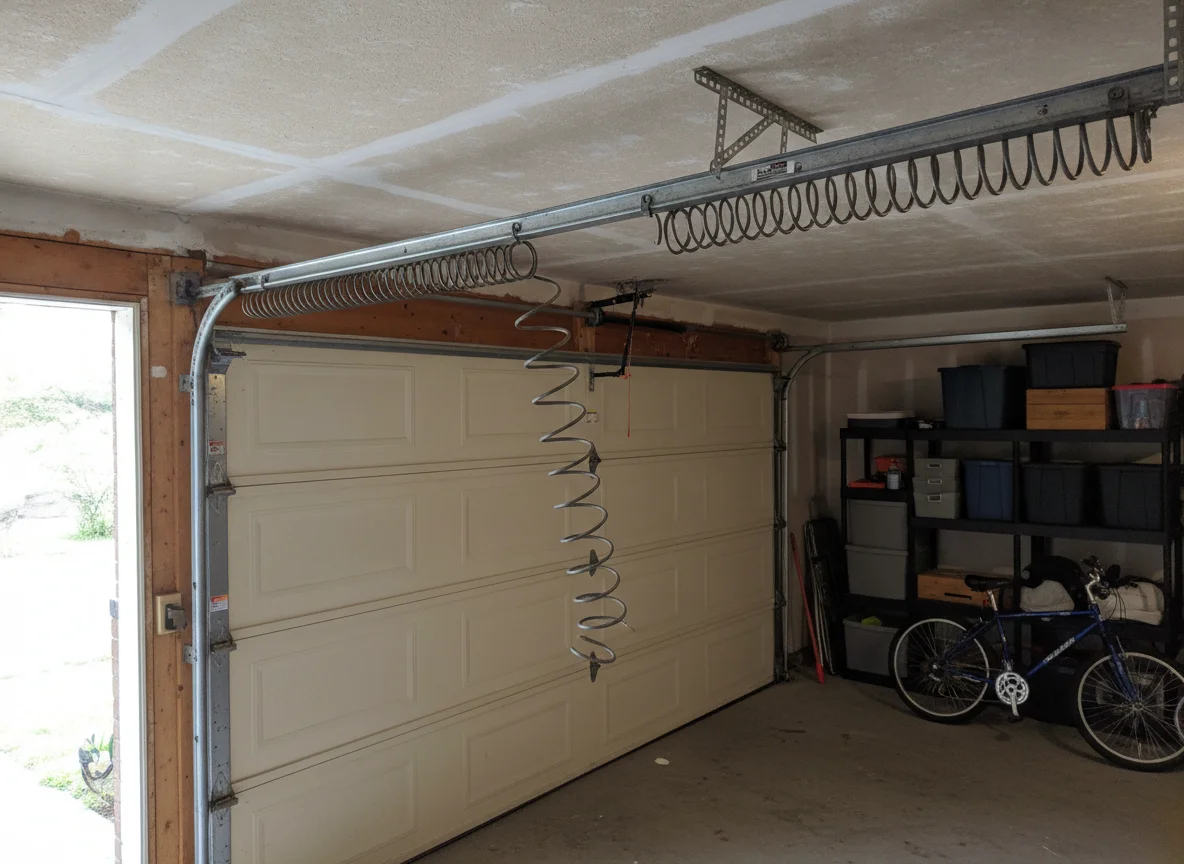
Telltale signs of a break
A rifle-shot crack in the garage, frequently while nobody is near the door. A torsion spring is wound tightest when the door is down, which is why they so often let go then, on a quiet afternoon.
A split in the coil
Look at the shaft above the shut door. A snapped torsion spring leaves a tidy, visible gap in the coils.
The door feels very heavy overnight, or sinks when you let go halfway.
The opener hums and labors, raises the door a few inches, then gives up
The opener often feels the extra load and turns the door around, so the fault gets blamed on the motor.
The door lifts unevenly, one side leading. Doors with a spring at each track may have one that's lost its tension.
It crashes shut through the last foot instead of settling softly.
A crack, and now the door refuses to lift? Leave it down and describe what's visible on the bar overhead.
Contact UsUntil the repair is done
A tightly wound spring holds enough force to break bones, and once it fails the door is supported only by whatever hardware is left. Until it's fixed:
Resist hauling the door up yourself, and stop thumbing the wall button
Openers are designed to guide a door, so repeat tries risk stripping the drive gears.
Keep your hands off the red cord while the door stands open
No spring means nothing stops it dropping with its full weight.
Torsion spring winding and unwinding is not a driveway job
Stored energy sits in the winding cones, which is precisely where the grave injuries in this work occur.
Keep kids and pets away, and use another parking spot if the door has jammed partway up.
A vehicle shut in the garage? Say so up front, please.
Torsion versus extension springs
Torsion springs sit on a steel shaft over the shut door, store energy as they twist, and turn the drums that pull the cables.
They're standard on most doors made in recent decades. They lift more smoothly, and a failed one stays on its shaft, so a break is less dangerous to bystanders.
Extension springs sit along the horizontal tracks on either side and stretch as the door comes down. They show up on older, lighter doors. A safety cable has to pass through each one, because a spring that breaks without it can whip across the garage at speed.
If yours lacks one, that deserves attention even when no spring has broken.
Switching an old extension-spring door over to torsion is doable on most of them, and it makes sense to bring up while the door is already open for repair.
How a spring repair unfolds
Measurements of the failed spring are taken
Wire thickness, coil diameter, overall length and which way it winds: get any of them wrong and the door never balances.
Door weight is taken into account
The correct spring is chosen for this particular door, not grabbed off the nearest shelf.
Removal of the old spring is done under control, the stored tension discharged before any bolt turns.
The new spring goes on and is wound to its setting, and each cable is confirmed seated in its drum so the lift is even.
The door is tested for balance
Disengage the opener and the door ought to stay put at about waist height, then move up and down cleanly under power again.
Say what's happening to the door
Begin with a line or two on what you've noticed. Knowing the part's name isn't expected.
One spring or two?
Both springs on a two-spring door have lifted it the same number of times. When one breaks, the other is probably close to going too.
Doing the pair in one go saves a return trip, and it stops a fresh spring from pulling against a tired partner on the same bar.
Ask what's advised for your door and why. Anyone doing paid repair work in Macomb must register with the city's Office of Community Development, so ask.
What affects the cost of spring repair
Torsion or extension spring, and on torsion doors, one spring or two.
Size and weight of the door
Double doors, wood doors and insulated steel doors need stronger springs than a light single.
Cycle rating of the spring
Springs come rated for a certain count of open-and-close cycles. A higher count costs more yet pays off wherever the garage door is used all day long.
Other worn parts
Fraying where cables meet the drums, rollers that drag, and tired bearings on the shaft are all cheaper to swap out during the same visit.
Switching an extension-spring door over to torsion, if that appeals.
Expected spring lifespan
Use matters far more than age. One spring on a door opened four times daily can outlast an identical spring on a household's main entrance by several years, because every opening counts as a cycle.
Hard winters add strain; January lows in nearby Prairie City average 16 F, a big reason many springs give out on the first cold mornings.
A spring that gave out early is worth raising; a higher-cycle one may suit.
Next to a repeat repair, the added cost of doing both is small.
If the spring is fine
Nothing has failed, but it runs slowly or noisily
A maintenance visit looks at your springs well before they fail.
Your questions
Is replacing my own spring a good idea?
Some homeowners handle extension springs, provided safety cables are in place and the door is raised and clamped.
Torsion springs are different. Winding calls for proper winding bars and knowing the exact spring needed, and one slip dumps the stored energy into your hands. On this job, calling in a professional protects your safety as much as it saves effort.
May I open the door just to get the car out?
Not safely, no. The door should stay closed; tell whoever you phone that a car is trapped.
Why did it break when no one was touching the door?
Fatigue builds with each cycle, and a torsion spring is under maximum wind when the door is down. Last-gasp failures often come at that point, and chilly weather leaves the steel more brittle. Nothing else needs to have gone wrong.
Do I need a different opener after this?
Rarely. An opener that spent days laboring against a dead spring is the exception, because its drive gear may be chewed up.
More garage door work
Garage Door Cable Repair
Cables that have frayed, snapped or slipped, and doors out of square.
Details →Garage Door Opener Repair
Humming, reversing or unresponsive openers, plus new ones when repairing isn't sensible.
See details →Garage Door Maintenance
Maintenance checks springs, cables, rollers and the reverse mechanism before any breakdown.
Read on →Reach out
Mention whether the door is single or double width, what you heard, if it moves, and whether a car is inside.
From the floor with the door down, a photo of the spring shows its type and the break. Request written estimates, as the Illinois Attorney General advises.