A wall mount garage door opener sits beside the door instead of hanging from the ceiling. It can suit garages with low ceilings, blocked overhead space, or unusual layouts. The right model depends on the shaft, spring system, balance, door weight, and wall space. A professional check helps prevent unsafe fitting errors.
Many homeowners consider this option when a ceiling unit blocks storage or hangs too low. Other garages have a beam, high-lift door, or ceiling that cannot support a standard rail. Macomb Garage Door Repair helps homeowners understand which opener style fits the door and the space.
Table of Contents
- What is a wall-mount garage door opener?
- When is a wall-mount opener the only practical option?
- How do you know whether your garage door is compatible?
- What are the advantages of choosing a side-mount opener?
- What are the disadvantages of wall-mount garage door openers?
- How do wall-mount openers compare with ceiling-mounted models?
- What features should you look for in a side-mount opener?
- What does installing a wall-mount garage door opener involve?
- Can you replace a ceiling-mounted opener with a wall-mount model?
- How should you choose the right wall-mount opener for your garage?
- Key takeaways
- Frequently Asked Questions
- Conclusion
What is a wall-mount garage door opener?
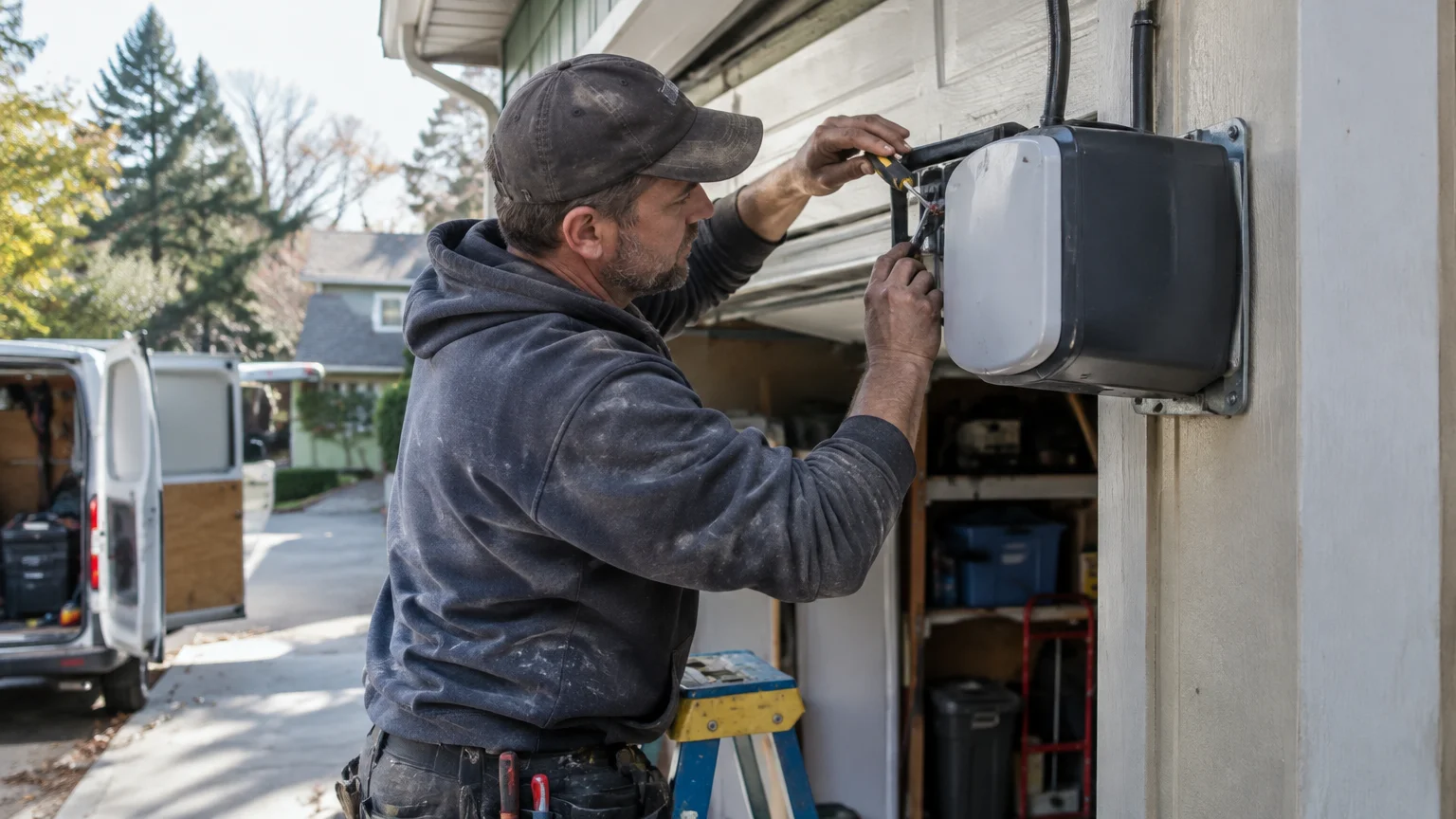
A wall-mount garage door opener is a motor placed beside the garage door. It turns the torsion shaft, which moves the door through its spring and cable system. This style is also called a side-mount or jackshaft opener.
How side-mount openers operate
The motor connects to the shaft above the garage door. When the motor turns, the shaft turns as well. The drums and cables then lift or lower the door. The opener does not pull the door with a long rail across the ceiling.
This setup needs a door with the right torsion spring system. The door must also move smoothly by hand when the opener is disconnected. A motor cannot safely fix a door that binds, drags, or has damaged cables.
A torsion shaft is the bar that turns the lift drums. The drums guide the cables as the door moves. Each part must work together for safe and even travel.
How they differ from ceiling-mounted openers
A ceiling-mounted model uses a rail, trolley, and arm. The motor often hangs near the back of the garage. A side-mount model uses wall space near the door and leaves the middle of the ceiling open.
Both styles need safety sensors and a door that works well. The best choice depends on the layout, door design, headroom, and needed features. The name of an opener does not show whether it fits every door.
When is a wall-mount opener the only practical option?
A wall-mount opener may be the best practical choice when a ceiling rail cannot fit. It can also help when the rail would block useful storage or lights. This often happens in garages with low headroom, deep beams, sloped ceilings, or overhead racks.
Low ceilings, blocked ceilings, and unusual layouts
A ceiling opener needs room for its motor, rail, and moving trolley. Lights, ductwork, storage racks, and beams can limit that space. A wall-mounted unit avoids much of this conflict.
Some garages have a raised track that follows the roof line. Others have a tall door that needs more lift than a standard rail can provide. A side-mount design may work well in these layouts, but the shaft and spring setup still need review.
Macomb homes can have different garage designs, especially after additions or remodeling. A layout that works for one property may not work for another. A careful inspection is safer than choosing a model by appearance alone.
Doors with limited overhead clearance
Limited headroom does not always mean a wall-mount unit is required. Special low-headroom hardware may solve some problems. A trained technician can compare that option with a side-mount design.
The garage door must not rub against the opener or nearby walls. It also needs room for the motor, wiring, release cord, and service access. A careful check prevents a tight fit from becoming a daily safety issue.
The garage door seal should also stay clear of the frame and floor. A poor seal can let in water, dirt, and cold air. It can also make the door harder to move if it catches on the ground.
How do you know whether your garage door is compatible?
Compatibility depends on the door system, not just the wall space. The main checks include the torsion shaft, spring location, door balance, cable condition, door size, and mounting surface. The maker’s instructions also set limits for each opener.
Door balance, shaft design, and torsion springs
A balanced door should stay controlled when opened by hand with the opener disconnected. If it drops, rises, or feels very heavy, the spring system may need service first. Garage door springs hold strong stored energy, so homeowners should not adjust or replace them.
The shaft must extend far enough for the opener connection. The drums, cables, bearings, and end plates must also be in good shape. A damaged shaft or loose bracket can cause poor tracking and unsafe movement.
A homeowner can look for obvious damage from a safe distance. You can also listen for grinding or watch for uneven travel. Do not touch spring parts, cables, or brackets that carry the door’s weight.
Door weight, height, and lifting needs
Manufacturers list limits for door height, weight, travel, and daily use. A door used many times each day may need a model made for more cycles. A tall or wide door may also need a certain drive and control setup.
A professional can test the door before selecting the motor. This matters because a larger opener cannot fix a weak spring or damaged panel. Macomb Garage Door Repair can help Macomb property owners match the opener to the actual door system.
The garage door itself should be in good condition. Bent tracks, worn rollers, loose hinges, and damaged panels can place extra strain on any opener. Repair work may be needed before a new motor is chosen.
What are the advantages of choosing a side-mount opener?
The main advantage is better use of the garage ceiling. A side-mount unit can also offer useful control features and a clean setup. These benefits matter most when overhead space is limited or the owner wants more room above a vehicle.
Clearer ceiling space and easier access
Without a long rail across the ceiling, the center of the garage may hold more storage or lighting. The ceiling can look less crowded. It may also be easier to move tall items into the garage.
The side position can make the opener easier to reach for service. However, it must stay protected from impacts and water. A wall that is weak, damp, or covered by shelves may not be suitable.
Keeping the center ceiling clear can help business and property owners use the garage for more than parking. Even so, storage must not block the door, sensors, release system, or motor. Safe access should remain part of the layout.
Security, lighting, and smart-home benefits
Many modern openers offer automatic locking, motion lights, battery backup, and app control. Some send alerts when the door opens or closes. These tools can help owners check the garage while away.
Smart controls still need careful setup. The home network should use a strong password and current security settings. Remote access should not replace regular checks of the door, cables, springs, and safety sensors.
Good garage door safety starts with the moving door. Features are helpful, but they do not make a damaged door safe. The spring system, tracks, sensors, and opener must all work together.
What are the disadvantages of wall-mount garage door openers?
A wall-mount garage door opener needs the right door and a strong mounting area. It may not suit every shaft, spring layout, or garage wall. It can also need more careful alignment than a basic ceiling-mounted replacement.
Installation limits and alignment needs
The motor must sit square with the shaft. The mounting brackets must hold firm during repeated starts and stops. Small alignment errors can cause noise, wear, or uneven door movement.
The opener also needs room for its release system and wiring. The wall may contain pipes, wiring, or finished surfaces that make work harder. A technician should check the area before drilling or removing old hardware.
Wall construction matters too. Drywall alone may not provide the support needed for the motor. The installer may need to find solid framing or another safe mounting point.
Maintenance concerns and operating noise
A side-mount unit does not remove the need for door care. The cables, drums, rollers, hinges, bearings, and spring system still need attention. Dirt, rust, loose fasteners, and poor balance can shorten opener life.
Some owners notice motor or gear noise because the unit sits near the wall. Noise can also point to a door problem instead of a motor problem. Cleaning visible parts and checking for loose objects are safe tasks for homeowners, but spring and cable work is not.
Do not spray unknown products on springs, tracks, or electrical parts. Follow the opener maker’s care instructions. If the door shakes, sticks, or changes speed, stop using it until the cause is checked.
How do wall-mount openers compare with ceiling-mounted models?
Wall-mount and ceiling-mounted openers can both operate a properly balanced door. The main difference is how each motor transfers force and where the hardware sits. The garage design should guide the choice instead of one feature or brand name.
Comparing drive systems and mounting locations
A ceiling model uses a rail and trolley. It often works well in a standard garage with enough headroom. A wall-mount unit turns the shaft directly and can free the ceiling from a rail.
Belt drive garage door opener systems are known for smooth operation in many ceiling-mounted designs. A side-mount opener may also run quietly, but its sound depends on the motor, shaft, wall, and door condition. The whole system matters more than the label.
A ceiling model may be easier to fit when the garage has open space and a common door design. A side-mount model may be more useful when the ceiling is crowded. Neither type can make an unbalanced door safe.
Choosing based on door use and garage design
A family garage with normal headroom may have several good options. A business property, tall door, or busy garage may need a system made for more frequent cycles. A professional can review the door’s use and the building’s layout.
The choice should also consider power-loss access, smart controls, lighting, and future repairs. Garage Door Opener Repair may be needed when an old system has damaged wiring, worn gears, or a failing control board.
The best garage door opener is not always the strongest model. It is the model that matches the door and works within the maker’s limits. Proper fit can help reduce strain and later repair problems.
What features should you look for in a side-mount opener?
The right features depend on the door, household, and access needs. Safety systems should come first. Convenience features matter after the motor, mounting, door balance, and controls are properly matched.
Battery backup, automatic locking, and safety sensors
Battery backup can help the door work during a power outage. An automatic lock can help hold the door closed when the opener is idle. Safety sensors use an invisible beam near the floor to detect an object in the door’s path.
Sensors must face each other and stay clear. A flashing light, reverse problem, or door that closes only when a button is held may need service. Never bypass the safety system.
Test visible sensor alignment only as described by the product instructions. Keep toys, tools, and stored items away from the sensor path. Children should not play with the wall control or release cord.
Remotes, keypads, Wi-Fi, and smart controls
A remote lets a driver open the door from the vehicle. A wireless keypad can give family members or workers entry without a remote. Wi-Fi controls may allow alerts, schedules, and remote status checks.
Before choosing smart features, check whether the opener works with the home’s network and preferred platform. Keep old remotes secure when users move out or a property changes hands. A garage door opener universal remote may work with some systems but not all of them.
Business owners should also think about who needs access. Remove old codes and remotes when staff or tenants leave. Smart access is useful only when the account and entry list stay current.
What does installing a wall-mount garage door opener involve?
Installing a wall-mount garage door opener involves checking the door, securing the motor, connecting controls, and testing safety functions. It is more than attaching a motor to the wall. The door and spring system must be ready before the opener is fitted.
Preparing the door and mounting surface
A technician checks balance, travel, rollers, hinges, cables, drums, shaft space, and spring condition. The mounting surface must support the unit without movement. Any door fault should be fixed before the new motor is placed under load.
Homeowners can safely clear stored items, remove loose objects near the door, and keep children and pets away during work. They should not loosen spring hardware, remove lift cables, or change brackets that carry door weight.
A clean work area helps the installer see the wall and door system. It also reduces the chance that tools, boxes, or vehicles block the work. The area should stay clear until testing is complete.
Connecting controls, sensors, and the emergency release
The installation includes the wall control, safety sensors, power connection, emergency release, and remote devices. The technician then tests opening, closing, reversing, locking, and manual release functions.
Work on torsion springs, extension springs, lift cables under tension, and bottom brackets can cause severe injury. These parts should be handled by someone with the right tools and training. Garage Door Installation may be the better service when the opener change is part of a larger door project.
A homeowner does not need professional help to clear the area or read the product guide. Professional help is needed for shaft connections, spring parts, cables, wiring, and final safety tests. Never treat a new opener as a simple wall project.
Can you replace a ceiling-mounted opener with a wall-mount model?
A ceiling-mounted opener can sometimes be replaced with a wall-mount model, but the change is not automatic. The door must have a suitable shaft and torsion setup. The wall must also provide enough strength and space for the new equipment.
Signs the existing setup can be converted
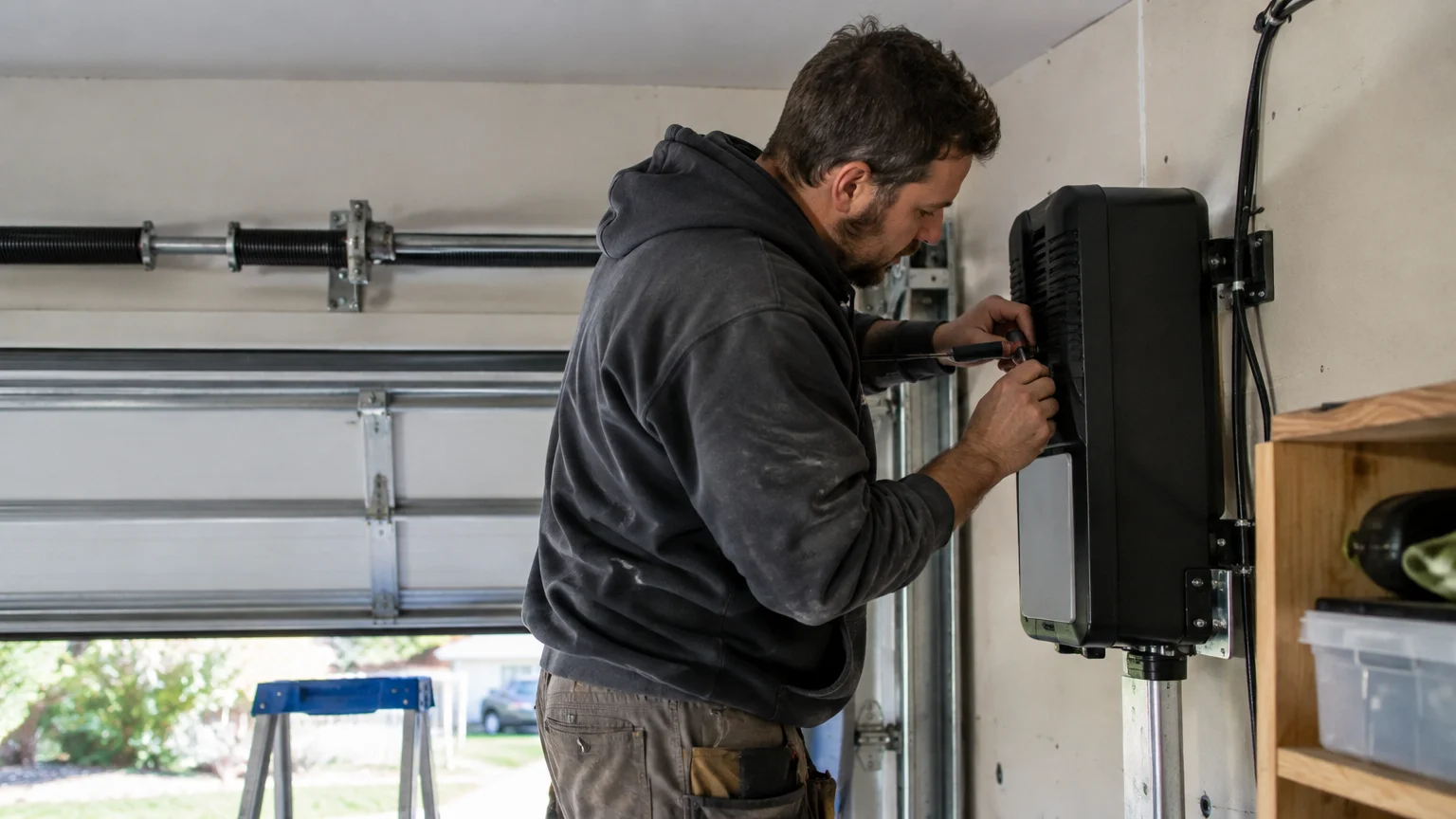
A conversion may be possible when the door has a compatible shaft, the spring system is sound, and the opener can sit beside the door. There must also be room for the motor, release cord, wiring, controls, and service access.
The old rail and hanging brackets may need removal. Holes, wires, or ceiling storage may need attention after the old system comes down. The new system should be selected before the old equipment is removed.
The wall should be checked for framing, pipes, wires, and moisture. The opener must not interfere with the track, cables, door panels, or nearby storage. A conversion is a system change, not just a motor swap.
Why spring and door repairs may be needed first
A wall-mount motor relies on the door’s shaft and spring system. A weak spring, damaged cable, bent track, or poor balance can place extra stress on the motor. Garage Door Off Track Repair or Garage Door Cable Repair may be needed before conversion.
Homeowners should not attempt spring adjustments or cable replacement. Stored force can release without warning. A trained professional can make the door safe before checking whether the new opener is suitable.
The same rule applies when a door feels heavy by hand. Do not use a larger motor to hide a spring or track problem. Repair the cause before choosing the opener.
How should you choose the right wall-mount opener for your garage?
Choose the opener after checking the door, shaft, wall, controls, and daily use. A good match should operate the door smoothly without forcing a weak or damaged system. The safest choice is based on compatibility first and features second.
A practical compatibility and feature checklist
A homeowner can gather useful information without touching hazardous hardware:
- Note the door type, height, width, and general condition.
- Check whether the ceiling has beams, storage, or limited headroom.
- Look for a clear wall area beside the door.
- List needed features such as battery backup, lighting, keypad, or Wi-Fi.
- Record symptoms such as grinding, stopping, reversing, or slow movement.
- Keep the opener model and door documents for the technician.
These observations help explain the problem. They do not replace a balance test or inspection of springs, cables, and brackets.
Think about how the space is used each day. A homeowner may care most about ceiling storage and lighting. A business or rental property may need secure access, battery backup, and clear records of who can open the door.
When to have a garage door professional assess the installation
A professional assessment is wise when the door is heavy, uneven, noisy, stuck, off track, or hard to lift. It is also needed before changing spring hardware or choosing a side-mount unit for an unusual layout.
Macomb Garage Door Repair serves property owners across the main Macomb area, from Lamoine Village and Downtown Macomb to Good Hope, Bardolph, Colchester, Sciota, and nearby communities. The team can help review opener concerns, door problems, and installation limits.
Macomb homeowners can safely watch for visible problems and keep the area clear. They should leave springs, cables, bottom brackets, and shaft connections to trained workers. This helps protect people, vehicles, and the door system.
Key takeaways
- A wall-mount garage door opener sits beside the door and turns its shaft.
- It can suit low ceilings, blocked overhead space, and unusual garage layouts.
- The door needs the right spring, shaft, balance, and mounting conditions.
- Homeowners can clear the work area and check visible problems, but not springs or cables.
- Features such as battery backup, sensors, lighting, and smart controls should follow safety and fit checks.
Frequently Asked Questions
Is a wall-mount garage door opener better than a ceiling model?
Neither style is best for every garage. A wall-mount garage door opener can save ceiling space and suit tight layouts. A ceiling model may be simpler for a standard garage with open headroom. The right choice depends on the shaft, spring system, wall strength, space, and daily use.
A side-mount model may be a strong choice when storage, beams, or lights block the ceiling. A ceiling model may work well when the layout is open. A professional can compare both choices without guessing.
Can any garage door use a side-mount opener?
No. The door needs a compatible torsion shaft and spring arrangement. It must also be balanced and move freely before the motor is connected. Door size, shaft space, wall strength, and the maker’s limits all matter.
A door can look like a good match and still have a hidden issue. Worn bearings, poor balance, or a damaged cable can change the answer. The full system should be checked before a model is selected.
Are wall-mount openers quieter?
They can be quiet, but sound depends on the whole door system. Rollers, hinges, bearings, springs, the mounting wall, and the motor all affect noise. A grinding or shaking sound may show a repair need.
Cleaning visible parts is safe, but spring and cable work requires trained help. Do not ignore a new sound after installation. It may show an alignment issue or a door problem.
Can a homeowner install one safely?
Some preparation is safe, such as clearing the garage and reading the product information. The actual fitting can involve shaft connections, brackets, wiring, sensors, and door forces.
Homeowners should not adjust springs, remove cables, or work on bottom brackets. Those parts can cause severe injury when handled incorrectly. A trained installer should handle hazardous parts and test the finished system.
What should someone do when the opener stops working?
Check whether the opener has power, whether the remote battery works, and whether anything blocks the safety sensors. Do not force the door or bypass the sensors.
If the door is heavy, stuck, crooked, or noisy, stop using it and arrange Garage Door Opener Repair. Keep people and vehicles away from a door that may fall or move without warning.
Conclusion
A wall-mount garage door opener can solve problems that make a ceiling-mounted system impractical. It can clear overhead space, support smart controls, and fit certain door layouts. Still, the door, spring system, shaft, wall, and safety controls must all match.
For homeowners and business owners in Macomb, the safest choice starts with an inspection instead of a guess. Macomb Garage Door Repair can help identify opener faults, door issues, and installation limits. Contact us today if urgent opener trouble affects access or security.